You are currently viewing Will My Trees Fall After a Storm Has Passed?

Will My Trees Fall After a Storm Has Passed?

The wind dies down, the rain stops, and the big oak in your front yard is still standing. That’s when most Sonoma County homeowners relax. A weakened tree is also most likely to fail right around then.

Trees don’t always come down during the storm. Many fail hours or days later, after saturated soil, cracked limbs, and strained roots finally give out. Learning what to look for in those first few days is how you protect your family, your home, and your property.

This guide walks you through the visible warning signs, what you can safely check on your own, and when storm damage repair services from a certified arborist make sense.

Key Takeaways

  • A tree that survives the storm can still fail afterward. Soil stays saturated and weak roots keep slipping for days.
  • Check the ground and roots first. A new lean, lifted soil, or exposed roots is one of the more serious signs of trouble.
  • You can do a safe visual inspection from the ground. Climbing, cutting, or going near downed lines is where the danger starts.
  • Hanging limbs, split trunks, and trees touching power lines need a professional, not a ladder and a chainsaw.
  • When in doubt, get a certified arborist’s assessment before the next storm rolls in.

Why Trees Fail After a Storm

A storm does two things to a tree. It loads the canopy and limbs with wind and water weight, and it softens the ground around the roots.

The second part is the one people miss. Sonoma County’s wet winters leave clay-heavy soil saturated for days. A root system that holds fine in dry ground can lose its grip once the soil turns into mud. That’s why a tree can stand through 50 mph gusts and then topple on a calm afternoon two days later.

A few terms you’ll see below:

  • Root plate: the wide, shallow mass of roots and soil that anchors the tree. When it starts to lift, the tree is losing its anchor.
  • Codominant stems: two main trunks growing from roughly the same point. They often split in storms.
  • Hangers: broken branches caught in the canopy that haven’t fallen yet.

How to Inspect Your Trees After a Storm

Walk your property once conditions are safe and daylight is good. Move slowly and look at each tree from a distance first, then closer. Keep both feet on the ground the whole time.

Step 1: Check The Lean and The Ground

Stand back and look at the trunk against a fixed line like a fence post or the corner of your house.

A tree that has always leaned a little is usually fine. A new lean is a warning sign.

Then look at the base. Soil heaving up on one side, a gap opening between trunk and ground, or roots lifting out of the lawn all point to a failing root plate. A leaning tree with disturbed soil at its base can come down with no further warning.

If the lean is over your house, a walkway, or a parked car, treat the area as off-limits and call a professional before anyone goes near it.

Step 2: Inspect The Trunk

Walk a slow circle around the trunk and look for vertical cracks, splits where two stems meet, and fresh wounds where bark has torn away.

A deep crack that runs up the trunk, or a split at a codominant union, means the tree has lost structural strength. Cavities, soft or rotten wood, and mushrooms growing at the base are signs of internal decay that a storm can expose or worsen.

Step 3: Look Up at The Canopy and Limbs

Scan the upper tree for broken branches still hanging in the canopy, limbs resting on the roof, and large bare sections where leaves were stripped away.

Hangers are unpredictable. A branch caught 30 feet up can drop on its own days later. Heavy limbs that cracked but didn’t fall are under tension and are dangerous to anyone standing beneath them.

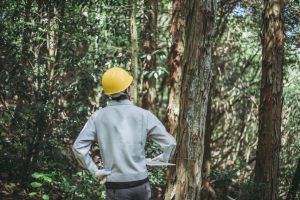
Tree Inspection Zones

Step 4: Note What’s Nearby

Finish by looking at what a falling tree or limb could hit if it fell. A tree leaning toward an open lawn is a different situation than the same tree leaning toward a bedroom.

Arborists take into consideration the condition of the tree plus what’s underneath it.

A structurally weak tree over a target deserves faster attention than a healthier one over an empty field.

Common Mistakes to Avoid After a Storm

  • Going near downed or sagging power lines. Always assume a line is live. Stay back at least 35 feet and call your utility and emergency services.
  • Standing under hanging limbs to get a better look. Hangers fall without warning. View the canopy from a safe distance.
  • Cutting a leaning or tensioned tree yourself. Stored tension can snap a trunk or kick a chainsaw back. This is where most serious tree-work injuries happen.
  • Assuming a tree is fine because it’s still upright. Saturated soil and hidden cracks fail on a delay. Upright today doesn’t mean stable tomorrow.

Most of these mistakes share one fix: keep your distance from the tree and leave the cutting to someone trained until the hazard is gone.

What You Can Safely Do Yourself

You can handle the ground-level work that keeps people safe without touching the tree itself.

  • Walk the property and do the visual inspection above.
  • Photograph any damage from a safe distance for your records and insurance.
  • Rope off or block access to areas under leaning trees or hanging limbs.
  • Clear small, light debris and twigs from walkways once you’ve confirmed nothing is hanging above you.
  • Write down what you saw so you can describe it accurately when you call.

Take your photos from a few angles and include something for scale, like a person standing well back or a car in frame. It helps an arborist assess the situation before they arrive.

When to Call a Professional

Some situations are past the point of a homeowner’s inspection. Call a certified arborist when you see any of the following:

  • A new lean, lifted soil, or exposed roots at the base
  • A split trunk or a crack running up the stem
  • Broken limbs hanging in the canopy or resting on a structure
  • A tree or large limb touching, or close to, power lines
  • Any damaged tree positioned over your home, driveway, or a space people use

These are the cases where storm damage repair services protect both your property and the people around it. A trained crew has the rigging, equipment, and experience to remove a hazard in a controlled way instead of hoping a weakened tree holds.

If you’re unsure which category your tree falls into, that uncertainty is itself a good reason to have it looked at. A short assessment costs far less than the repair after a tree comes through a roof.

Not Sure if Your Tree is Safe? Get it Assessed

Sandborn Tree Service has cared for Sonoma County trees for over 50 years, through every kind of winter storm this region produces. The team knows how local species and saturated clay soils behave after heavy wind and rain.

If a storm has passed and you’re not sure whether a tree on your property is safe, a certified arborist can tell you what you’re dealing with and what to do next.

Contact our team online or call Sandborn Tree Service at (707) 823-9144 to schedule an assessment with the appropriate estimator. You’ll get an on-site evaluation, a detailed proposal by email, and clear next steps for your trees and your property.

Frequently Asked Questions

How long after a storm can a tree still fall?

Days, sometimes longer. Saturated soil can keep a root system slipping well after the weather clears, and cracked limbs can drop on their own. Inspect your trees in the first day or two and keep watching leaning trees until the ground dries out.

A new lean combined with lifted or heaving soil at the base. That points to a failing root plate, and the tree can fall with little additional warning. Keep people and vehicles clear and call a professional.

Small, light debris on the ground is fine to clear once you’ve confirmed nothing is hanging overhead. Anything involving a ladder, a chainsaw, a tree under tension, or a limb near power lines should go to a trained crew. Most serious tree-work injuries come from homeowners cutting damaged trees.

Treat the line as live, stay back at least 35 feet, and call your utility and emergency services. Don’t attempt any cutting or clearing near the line yourself.

Leave a Reply