You’ve heard about defensible space every fire season. The 100-foot rule. The zones. The CAL FIRE brochures in the mail.
When it’s time to actually do the work on your Sonoma County property, the question gets specific fast: what counts as Zone 1, what counts as Zone 2, and what are you supposed to do with the trees and shrubs in each one?
This guide compares the 2 main outer zones side by side, with tree and shrub recommendations you can use this season and notes on when fire defensible space services from a certified arborist are worth the call.
Key Takeaways
- Zone 1 covers 5 to 30 feet from the home and uses tighter rules for fuel reduction.
- Zone 2 covers 30 to 100 feet (or to the property line) and focuses on slowing a fire’s approach.
- Zone 1 work is detail-intensive. Zone 2 work is broader and centered on spacing and thinning.
- Both zones share the same goal: reduce fire intensity and ember production reaching the house.
- Tree and shrub choices matter as much as spacing. Low-fuel plants and well-pruned trees change fire behavior.
- A certified arborist can plan the work for tree health and fire safety together.
What is Zone 1?
Zone 1 is the area from 5 to 30 feet from a structure. CAL FIRE calls it the Lean, Clean, and Green Zone. The job here is to keep fire from reaching the house and to reduce the amount of fuel that can ignite from embers landing on the structure.
Every Sonoma County homeowner inside a state or local fire hazard zone should be in compliance with Zone 1 regulations. That’s most of the county.
Core rules for Zone 1:
- Remove all dead plants, grass, and weeds
- Keep tree branches at least 10 feet from chimneys and other trees
- Prune low limbs so the bottom of the canopy is at least 6 feet off the ground
- Space tree crowns at least 10 feet apart
- Keep grass mowed to 4 inches or less
Most of the close-in fuel work happens here. Zone 1 has the biggest direct effect on whether flames reach the structure.
What is Zone 2?
Zone 2 is the area from 30 to 100 feet from a structure, or out to the property line if the parcel is smaller. CAL FIRE calls it the Reduce Fuel Zone. The job here is to slow a fire down before it reaches Zone 1, and to cut the size of any flames that arrive.
Anyone on a rural, hillside, or larger parcel where natural vegetation extends well past the close-in landscape should consider adapting Zone 2 regulations.
Larger Sonoma County parcels almost always need fire-defensible space services for Zone 2, because the work involves climbing, thinning, and ladder fuel removal across acres rather than yards.
Core rules for Zone 2:
- Cut annual grass down to 4 inches
- Create horizontal spacing between shrubs and trees
- Create vertical spacing between grass, shrubs, and tree canopies (no ladder fuels)
- Remove dead trees, branches, and accumulated leaf litter
- Widen spacing on steeper slopes
The point is fuel reduction. Zone 2 stays less manicured than Zone 1.
The biggest practical difference: Zone 1 is about precision, and Zone 2 is about scale. You can spot-check Zone 1 in an afternoon. Zone 2 usually needs a plan and a crew.
Common Zone 1 and Zone 2 Mistakes
Mixing up the Zones is the Most Common Inspection Failure
Owners often overwork Zone 2 and underwork Zone 1. The pattern usually looks like this:
- Too much native vegetation cleared on the outer edge, which causes erosion and weed problems
- Ladder fuels and overhanging branches left close to the house
- Wood mulch and dead leaves still up against the foundation
Insurance Renewals Now Factor in Defensible Space
Several Sonoma County carriers now request defensible space photos before they renew a policy. What they’re looking for:
- A clean Zone 1 right around the structure
- A thinned, well-spaced Zone 2 on the outer edge
- Consistent maintenance across both zones, not one done and one neglected
Wrong Cuts Harm Tree Health
Fire work done wrong damages trees that take decades to replace:
- Aggressive Zone 2 thinning that removes the wrong trees changes the microclimate and dries out remaining fuel faster
- Topping in Zone 1 weakens long-lived oaks and other native species
- Flush cuts and improper pruning create entry points for disease
Properties that get both zones right usually rely on fire defensible space services that plan the tree work as one job, not two disconnected projects.
Tree and Shrub Recommendations by Zone
Trees in Zone 1
- Prune lower limbs so the bottom 6 feet of the trunk is clear (more for taller trees)
- Remove dead branches, watersprouts, and crossing limbs
- Space tree crowns at least 10 feet apart
- Remove trees that overhang the roof or sit closer than 10 feet to a chimney
- Avoid resin-heavy species directly next to the house (pines, junipers)
Shrubs in Zone 1
- Keep shrubs small, well-spaced, and well-irrigated
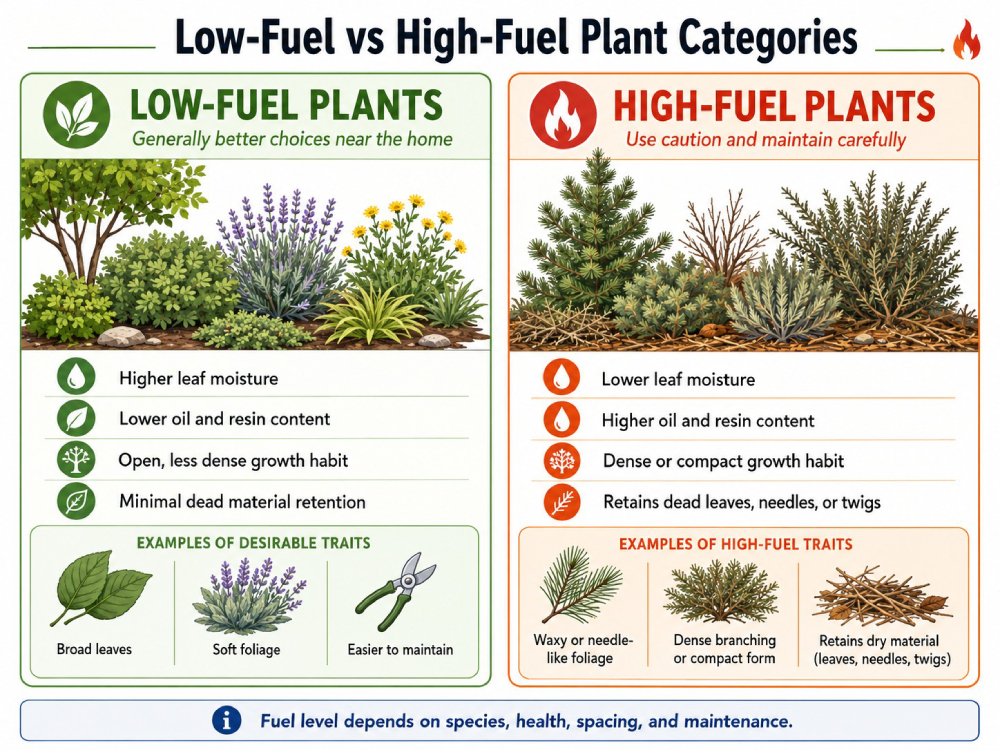
- Use low-fuel options with high moisture content and an open growth habit
- Avoid dense, oily, or resinous shrubs near the house
- Replace woody decorative bark with rock or gravel within 5 feet of the foundation
Trees in Zone 2
- Thin to create horizontal spacing between canopies (wider on slopes)
- Remove dead, diseased, and dying trees
- Prune ladder fuels under healthy trees so flames can’t climb
- Keep healthy native oaks and other long-lived species when possible
- Limit removal of mature canopy, since shade reduces ground fuel drying
Shrubs in Zone 2
- Cluster shrubs in small groups with bare ground or low ground cover between groups
- Remove dead material from inside each shrub
- Keep shrub clusters away from the base of trees to break ladder fuels
- Favor native, lower-fuel species adapted to Sonoma County conditions
Focus on Zone 1 work if you...
- Live on a smaller parcel where most of your property sits within 30 feet of a structure
- Have trees, shrubs, or wood mulch right next to the house
- Have outbuildings, decks, or fences that share fuel with the main home
- Need to pass a CAL FIRE or insurance inspection in the near term
- Haven’t done a close-in review in the past 12 months
Focus on Zone 2 work if you...
- Own a hillside, rural, or larger parcel with significant natural vegetation
- Have dense brush, grass, or tree stands within 100 feet of the home
- See ladder fuels (low branches, deadwood, shrubs under trees) on the outer edge
- Have had storm or drought damage that left dead trees or limbs
- Want a multi-year fuel reduction plan and not just one-time clearing
Most Sonoma County properties need work in both zones. The usual question is where to start.
Schedule a defensible space walk-through
Fire defensible space services from a certified arborist preserve mature trees where possible, which is the harder and more skilled version of this work.
Sandborn Tree Service has done fire defensible space safety work in Sonoma County for over 50 years. Our team includes ISA Certified Arborists and Sonoma County Board Certified Master Arborists who plan Zone 1 and Zone 2 work as one connected job, with tree health and fire safety considered together.
Call Sandborn Tree Service at (707) 823-9144 or contact us online to schedule an arborist visit.
Frequently Asked Questions
Does defensible space work hurt property value or curb appeal?
Done right, no. Good defensible space keeps mature trees, well-spaced shrubs, and healthy ground cover in place. The work looks like thoughtful landscape maintenance, not clear-cutting. Aggressive removal that strips a property is usually a sign the work wasn’t planned by an arborist.
What's the best time of year to do defensible space work in Sonoma County?
Late winter through early spring is the main window. Trees are dormant, soil is still moist, and the work finishes before fire season starts in late spring. Light maintenance (grass mowing, leaf cleanup, gutter clearing) continues through summer. Avoid major pruning during nesting season when possible, since federal law protects active bird nests.
Do I have to do both zones?
In California fire hazard severity zones, yes. The 100-foot defensible space requirement covers both. On smaller parcels, Zone 2 may end at the property line, but the requirement still applies up to that line.
Can I keep mature oaks in Zone 1?
Often, yes. Sandborn’s first priority is preservation. Mature oaks in Zone 1 can stay when they’re healthy, well-pruned, and not overhanging the structure. Removal is the last option.
Do I need a permit to remove a tree?
Sometimes. Sonoma County and several cities have tree ordinances that apply to specific species and sizes. Sandborn can identify what needs a permit and handle the paperwork.
How often do I need to redo the work?
Annual review is the standard. Grass and weeds need attention every spring. Tree pruning and shrub thinning hold up longer, often 2 to 3 years between major work, with spot maintenance after storms or drought stress.