Sonoma County gets hammered by wind. Diablo events in fall, atmospheric river storms in winter, and unpredictable gusts in between. The trees that come down on cars, homes, and power lines almost always show warning signs months ahead.
This checklist walks through the tree services in Sonoma County your property needs before the next big wind event, organized by how much time you have.
Key Takeaways
- Most wind-damaged trees fail in predictable ways: dead limbs, codominant stems, or root issues missed for years
- The biggest gains come from work done months ahead, not the day a storm is forecast
- Eucalyptus, blue gum, Monterey pine, and a few other species need extra attention in Sonoma County
- Cabling can help certain trees, but only after a professional risk assessment
- Last-minute topping is the wrong call and often makes trees more dangerous
- A certified arborist can identify which trees need work and which can wait
Wind Risk in Sonoma County
Two wind seasons hit the county. Diablo winds come off the inland valleys in fall, dry and fast, often 40 to 60 mph in gusts. Winter atmospheric rivers bring sustained wind plus saturated soil, which is when root failures spike.
Both seasons take down trees that were already compromised. Pre-storm prep is about catching the warning signs early.
2 to 3 Months Out: Structural Work and Assessments
This is the window for any work that needs planning, permits, or a return visit. Crews book up fast once the first storm arrives.
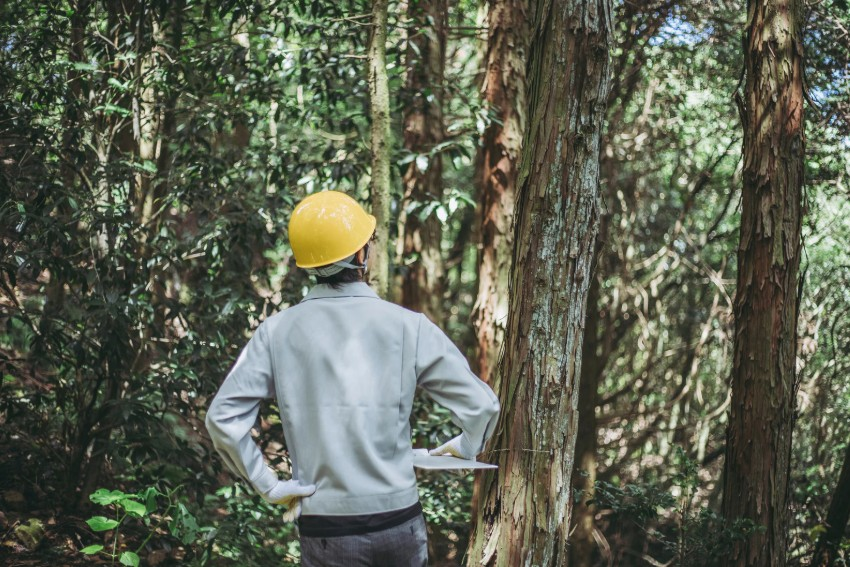
- Schedule a tree risk assessment for any tree larger than 20 feet near a structure, driveway, or power line. Look for ISA Certified Arborists or Board Certified Master Arborists.
- Plan structural pruning for trees with crossing branches, watersprouts, or unbalanced canopies. Structural pruning takes time to do correctly and weeks for the tree to settle.
- Address dead and declining trees that have been on the “we’ll deal with it later” list. Removal is harder, slower, and more expensive once the ground is wet.
- Get permits in motion for protected species or oversized trees. Sonoma County and several cities require permits, and the paperwork can take 2 to 4 weeks.
- Evaluate cabling candidates. Trees with codominant stems, included bark, or split unions sometimes benefit from cabling. A professional has to assess this in person.
Walk your property after a quiet, calm day. Many warning signs (fungi at the base, deadwood, leaning) are easier to spot when the canopy isn’t moving.
4 to 6 Weeks Out: Pruning, Clearance, and Clean-Up
This is when most pruning and clearance work gets done. The tree has time to seal cuts before the wettest weather arrives.
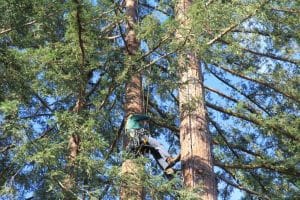
- Prune deadwood out of canopies, especially over driveways, decks, and roof lines. Deadwood is the most common storm projectile.
- Crown clean mature trees to remove dead, dying, diseased, and broken branches. This follows ANSI A300 standards.
- Crown thin sparingly. Removing 10 to 15% of small interior branches reduces wind sail without weakening the tree. Aggressive thinning does the opposite.
- Clear branches off the roof. Anything touching or overhanging the structure should go, especially over chimneys and gutters.
- Schedule power line clearance with PG&E or a qualified line-clearance contractor. Don’t do this yourself.
- Install or inspect cables. Existing cables need annual inspection. New cabling work should be done well before storm season.
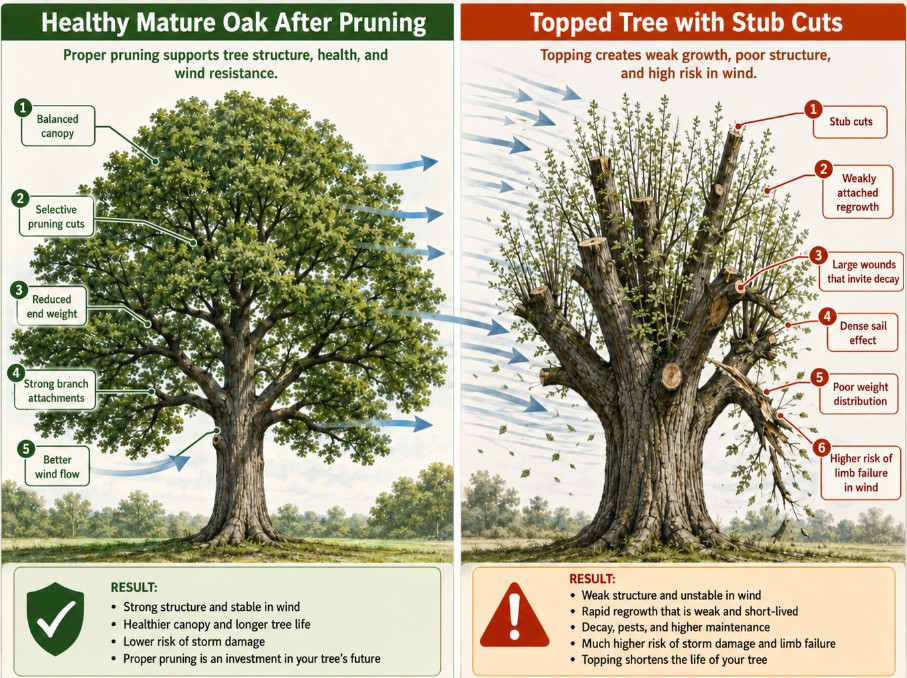
Ask for any pruning to follow ANSI A300 standards in writing. Topping (cutting major branches back to stubs) damages tree structure and often increases wind risk.
Days Out: When Wind Arrives
By this point, the major work is either done or it’s too late. The days-out list is about reducing damage from what’s still standing.
- Walk the property and remove loose debris. Trash cans, patio furniture, planters, and stored items become projectiles in 50 mph wind.
- Park vehicles away from large trees, especially eucalyptus, blue gum, and any tree with visible lean.
- Charge devices and stage emergency supplies in case of outage. PG&E often runs pre-emptive shutoffs during high-wind events.
- Photograph trees near structures for insurance documentation, with date stamps.
- Identify a safe room away from large windows and exterior walls on the side of the house facing the wind.
- Call Sandborn’s 24/7 Storm Emergency Service number: (707) 823-9144.
If a forecast shows sustained winds above 40 mph and you have a tree you’ve been worried about, this is not the time to bring out a chainsaw. Call a professional for tree services in Sonoma County before the event when possible, and stay clear of the tree during it.
High-Risk Species in Sonoma County
Some species fail in wind more often than others. If you have any of these within falling distance of a structure, prioritize an assessment.
- Eucalyptus (especially blue gum): Tall, brittle, and prone to dropping major limbs without warning. Common in older Sonoma County properties and along driveways.
- Monterey pine: Shallow-rooted and vulnerable to pitch canker. Often fails at the base in saturated soil.
- Monterey cypress: Wind-sail issues at maturity and a tendency to develop codominant stems that split.
- Silver-dollar gum and other ornamental eucalyptus: Same failure patterns as blue gum, smaller scale.
- Italian stone pine and Aleppo pine: Heavy canopies, weak attachment angles, common in older landscaped properties.
- Mature redwoods on isolated sites: Healthy in groves, more vulnerable when left as solitary specimens after surrounding trees are removed.
- Oak Varietals: Sometimes lose water-soaked limbs. Oaks with dense, unpruned canopies are prone to blowing over because the wind cannot travel through.
Many of these trees can stay with proper pruning, cabling, and monitoring. Some can’t. An arborist will tell you which is which.
Eucalyptus is a Sonoma County signature problem. If you have a row of blue gums planted as a windbreak (a common 1900s practice), get them assessed every 2 to 3 years.
Risk Factors to Flag
Whether the species is on the high-risk list or not, certain warning signs warrant a professional look.
- Lean that has developed recently, especially with cracked soil on the opposite side
- Fungal conks or mushrooms at the base or on the trunk, which signal internal decay
- Cavities, hollow sections, or large wounds on the trunk or major limbs
- Codominant stems with included bark at the union
- Major dead branches in the upper canopy
- Roots that have been cut, paved over, or damaged by construction or trenching
- Sudden dieback in part of the canopy after a healthy season
- Trees that have already lost large limbs in past wind events
A photo is enough to start. An on-site assessment determines next steps.
Put a Plan in Place Before Storm Season
Sandborn Tree Service has worked Sonoma County properties for over 50 years, through every major Diablo wind event and atmospheric river. Our team includes ISA Certified Arborists and Sonoma County Board Certified Master Arborists who plan pre-storm work with preservation in mind.
What that means on a property:
- A walk-through with an estimator who reads species, structure, and site context together
- A written proposal that ties each recommendation to a reason
- Pruning that meets ANSI A300 standards. No topping. No flush cuts.
- Cabling installed only after a professional risk assessment
- 24/7 emergency storm response for trees that come down anyway
- Biomass recycled into mulch, compost, or milled lumber when usable
Call Sandborn Tree Service at (707) 823-9144 or contact us online to schedule a property walk-through.
Frequently Asked Questions
How far ahead should I start pre-storm tree work?
2 to 3 months ahead for structural pruning, cabling, or removals. 4 to 6 weeks ahead for deadwood removal and routine pruning. Days-out work is about staging and documentation, not major tree work.
Is topping a good way to make a tree wind-safe?
No. Topping weakens trees, encourages weakly attached regrowth, and shortens the tree’s lifespan. Any reputable arborist will refuse to top a healthy tree. Crown cleaning, crown thinning, and structural pruning are the correct approaches.
Does cabling actually prevent storm damage?
Cabling can reduce the risk of failure for trees with specific structural issues such as codominant stems or weak unions. It has to be installed and inspected by a qualified arborist. Cabling supplements good pruning.
Are eucalyptus trees safe to keep on my property?
Sometimes. Eucalyptus can be maintained with regular pruning and monitoring. A blue gum within striking distance of a house or driveway needs an assessment every 2 to 3 years. Some trees should come out. Many can stay.
What if a wind event is forecast tomorrow and I'm worried about a tree?
Don’t attempt major tree work yourself in a tight timeline. Call Sandborn at (707) 823-9144 and ask about options. If the tree is genuinely unsafe, an arborist can assess quickly and recommend next steps.
Do I need a permit to prune or remove a tree?
Sometimes. Sonoma County and several cities have tree ordinances that apply to certain species and sizes, including protected oaks. Sandborn can identify what needs a permit and handle the paperwork.
Will my insurance cover storm damage from a tree I knew was risky?
Coverage varies. Insurers often deny claims involving “known hazards” that were documented but not addressed. A professional risk assessment plus a written record of the work done strengthens any future claim.