
April is when trees begin waking up for the growing season. Buds form, leaves start to emerge, and root systems shift into active growth mode. While your trees may look healthy on the surface, early spring is often when they need the most support below ground.
Deep root fertilization is one of the most effective ways to strengthen trees before summer stress arrives. If you want healthier, more vibrant trees this season, April is the ideal time to act.
Why Fertilizing Trees and Shrubs Matters
Trees growing in residential landscapes don’t always have access to the nutrients they need. Unlike forest environments where organic matter naturally replenishes soil, lawns often compete with trees for nutrients. Compacted soil from foot traffic, construction, and mowing equipment further limits root access to oxygen and essential minerals.
Even trees that appear strong may be struggling underground.
When nutrient deficiencies develop, trees may show:
-
Yellowing leaves (chlorosis)
-
Slow or stunted growth
-
Thinning canopy
-
Early leaf drop
-
Increased vulnerability to pests and disease
By the time visible stress appears, the issue has often been developing for years.
How Deep Root Fertilization Works
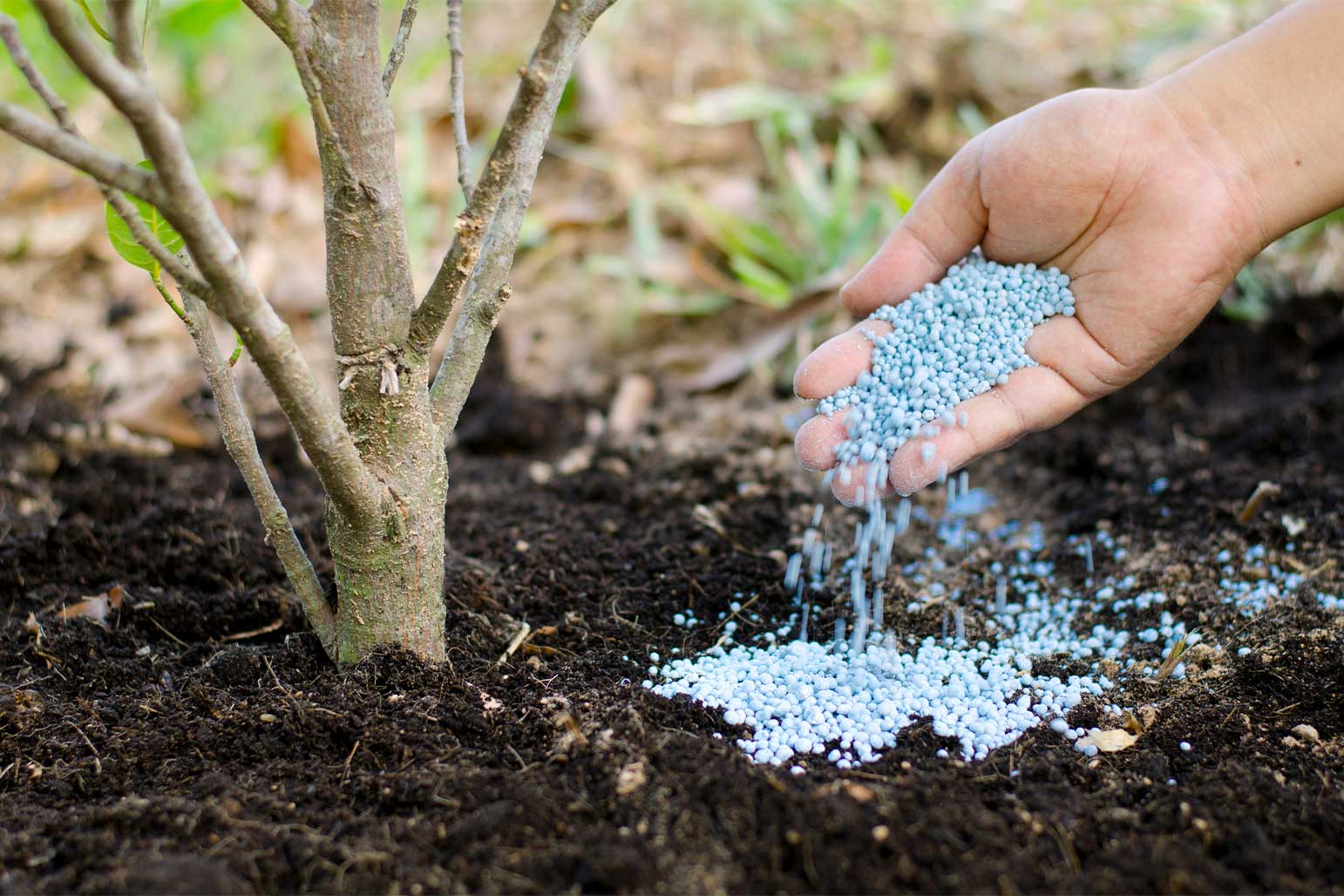
Deep root fertilization isn’t simply spreading fertilizer on top of the soil. It’s a precise, targeted process designed to deliver nutrients directly where trees need them most.
At Sandborn Tree Service, deep root fertilization involves injecting a proprietary blend of essential nutrients, trace metals, and organic matter 4–6 inches below the soil surface. This is where the majority of feeder roots are located.
This targeted application:
-
Ensures efficient nutrient absorption
-
Minimizes runoff and waste
-
Improves soil structure
-
Supports long-term root development
By placing nutrients directly into the root zone, trees can access what they need immediately and continuously throughout the growing season.
Key Benefits of Deep Root Fertilization
Rejuvenates and Improves Soil Structure
Over time, soil can become compacted and depleted. Deep root fertilization helps break up compacted soil caused by foot traffic and equipment, allowing better airflow and water penetration.
Stimulates Root and Stem Growth
Strong roots support healthy canopy growth. Fertilizing in April promotes vigorous development as trees enter peak growing season.
Provides Continuous Feeding
The slow-release nitrogen in the fertilizer provides steady nutrition throughout the season, reducing stress during hot summer months.
Encourages Symbiotic Activity
Healthy soil supports beneficial microorganisms that work in partnership with tree roots. This symbiotic relationship enhances nutrient uptake and overall tree vitality.
Corrects Nutrient Deficiencies
If your trees are showing signs of decline or chlorosis (yellowing leaves), targeted fertilization can help restore balance and improve leaf color and density.
Why April Is the Best Time to Act
Early spring is when trees are most responsive to fertilization. As root systems become active, they are ready to absorb nutrients and store energy for the months ahead.
Waiting until midsummer, when drought stress and heat set in, makes recovery more difficult. Deep root fertilization in April sets your trees up for success before stress becomes visible.
Don’t wait until you see signs of decline. Prevention is far more effective than treatment after damage occurs.
Protect Your Landscape Investment
Trees add shade, beauty, and long-term value to your property. Supporting their health now helps prevent costly removals or major corrective treatments later.
Deep root fertilization can save a struggling tree — and strengthen healthy ones even further.
If you’re unsure when your trees were last fertilized or have concerns about their health, now is the time to schedule an evaluation. Contact Sandborn Tree Service today to ask about the best timing for fertilizing your trees and shrubs this season.
Healthy roots lead to healthy trees — and April is the perfect time to give them what they need.


